Guides
Calories, countedand explained.
Straight answers to the calorie questions people actually search: how to count them, what a deficit really means, and how many you burn from steps and workouts. Every guide leads with the answer, then shows the math, with cited sources.
AI detected
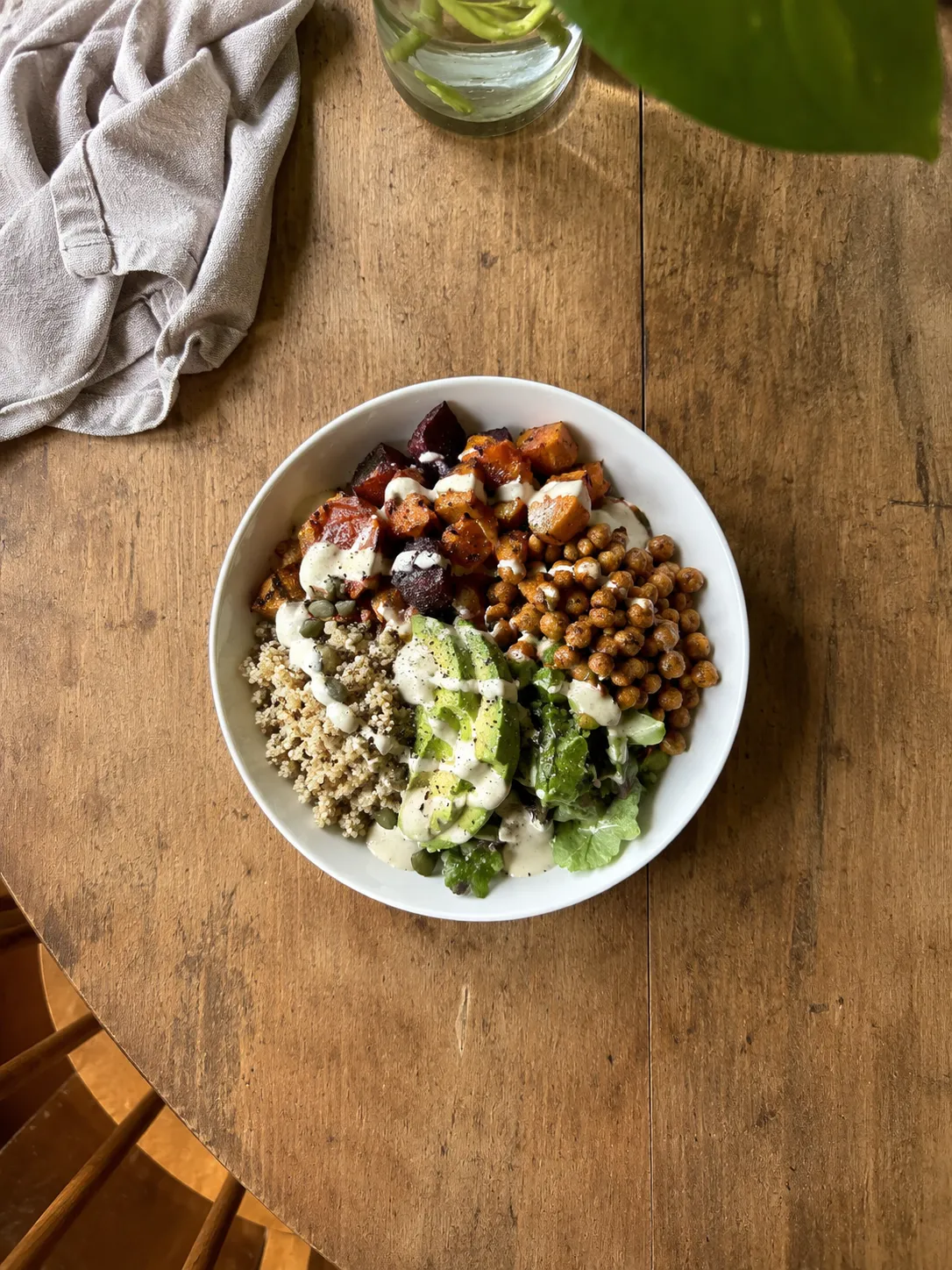
Grain bowl610kcal
28g
Protein
78g
Carbs
21g
Fat
Calorie math & weight loss
The math, made simple.
Guides
Read next.
How to count calories
To count calories, first set a daily target based on your goals, then log everything you eat by reading nutrition labels, weighing or estimating portions, and recording it consistently. Accuracy comes from doing it every day, not from being perfect on any one meal.
How to count calories in food
To count calories in a food, read its nutrition label or look it up in a database like USDA FoodData Central, then multiply by the portion you actually ate. For mixed dishes you add up the ingredients, and for restaurant food you estimate, since exact numbers are rarely available.
How a calorie deficit helps you lose weight
A calorie deficit means taking in fewer calories than your body uses, which forces it to draw on stored energy. Since roughly 3,500 calories is a rough stand-in for about 1 pound of fat, a modest daily deficit adds up to steady, sustainable loss over weeks.
Eating 1,000 calories a day: what to know
Eating 1,000 calories a day is a very low intake that sits below the daily energy needs of most adults, so it carries real risks like muscle loss, nutrient gaps, and metabolic adaptation. It is not appropriate for most people to do on their own, and it should be undertaken only with guidance from a healthcare provider.
Cutting 1,000 calories a day for weight loss
Cutting 1,000 calories a day from your maintenance level is a large deficit that points toward roughly 2 pounds of loss a week using the rough 3,500-calorie-per-pound rule. It can work for some people, but it is aggressive, hard to sustain, and worth discussing with a healthcare provider first.
Burning 1,000 calories a day for weight loss
Burning 1,000 calories a day through exercise can help create a deficit, but it takes a large amount of activity and you cannot reliably out-train your diet. Combining a modest calorie reduction with regular movement is usually more effective and sustainable than relying on exercise alone.
How many calories should lunch be?
For most adults, lunch falls somewhere around 400 to 700 calories, which is roughly 25 to 35 percent of a typical daily calorie target. The right number for you depends mostly on your overall daily needs and how you divide calories across your meals.
How many calories per meal?
The simplest way to find calories per meal is to divide your daily calorie target by the number of meals you eat. At common targets that lands around 375 to 830 calories per meal, though you can weight meals unevenly to match your appetite and schedule.
Steps & calories burned
What movement actually burns.
Guides
Read next.
How many calories does 10,000 steps burn?
Most adults burn roughly 300 to 550 calories walking 10,000 steps. The exact number depends mostly on your body weight and how briskly you walk, not on the step count alone.
How many calories does 15,000 steps burn?
Most adults burn roughly 450 to 820 calories walking 15,000 steps, with about 600 being typical for a 70 kg (154 lb) person at a moderate pace. The exact number depends mostly on your body weight and how briskly you walk.
How many calories does 20,000 steps burn?
Most adults burn roughly 600 to 1,100 calories walking 20,000 steps, with about 800 being typical for a 70 kg (154 lb) person at a moderate pace. The exact number depends mostly on your body weight and how briskly you walk.
How many calories does 7,500 steps burn?
Most adults burn roughly 220 to 420 calories walking 7,500 steps, with about 300 being typical for a 70 kg (154 lb) person at a moderate pace. The exact number depends mostly on your body weight and how briskly you walk.
How many calories does 5,000 steps burn?
Most adults burn roughly 150 to 280 calories walking 5,000 steps, with about 200 being typical for a 70 kg (154 lb) person at a moderate pace. The exact number depends mostly on your body weight and how briskly you walk.
How many calories do jumping jacks burn?
Jumping jacks burn roughly 8 to 14 calories per minute for most adults, or about 12 to 21 calories per 100 reps. The number depends mostly on your body weight and how fast you keep going.
How many calories do push-ups burn?
Push-ups burn roughly 4 to 14 calories per minute depending on how hard you go, or about 3 to 7 calories per set of 10 to 15 reps. Body weight and pace decide where you land.
How many calories do sit-ups burn?
Sit-ups burn roughly 4 to 12 calories per minute depending on pace, or about 2 to 6 calories per set of 20 reps. Body weight and how fast you move decide where you land.
How many calories do squats burn?
Bodyweight squats burn roughly 5 to 9 calories per minute for most adults, or about 3 to 8 calories per set of 15 to 20 reps. Adding weight and moving faster pushes it higher.
How to burn 1,000 calories a day
Burning 1,000 calories a day through exercise is a large amount that typically takes 60 to 120 minutes of vigorous activity like running, cycling, or swimming. It is doable occasionally, but hard to sustain daily, and for weight loss adjusting what you eat usually matters more.
How to burn 500 calories
Burning 500 calories usually takes about 40 to 60 minutes of moderate to vigorous activity such as running, cycling, or a brisk long walk. The exact time depends mostly on your body weight and how hard you work.
Guides · FAQ
Questions, answered.
Two things: the math of calories (how to count them, what a calorie deficit is, how much to eat) and how many calories you burn from movement (steps, walking, and common exercises). Each guide answers one question directly, then explains the detail with cited sources.
Stop guessing. Start snapping.
calorietrack.ai. No signup. No card. Photograph a meal in any browser.